
Call Us Today512-320-9126
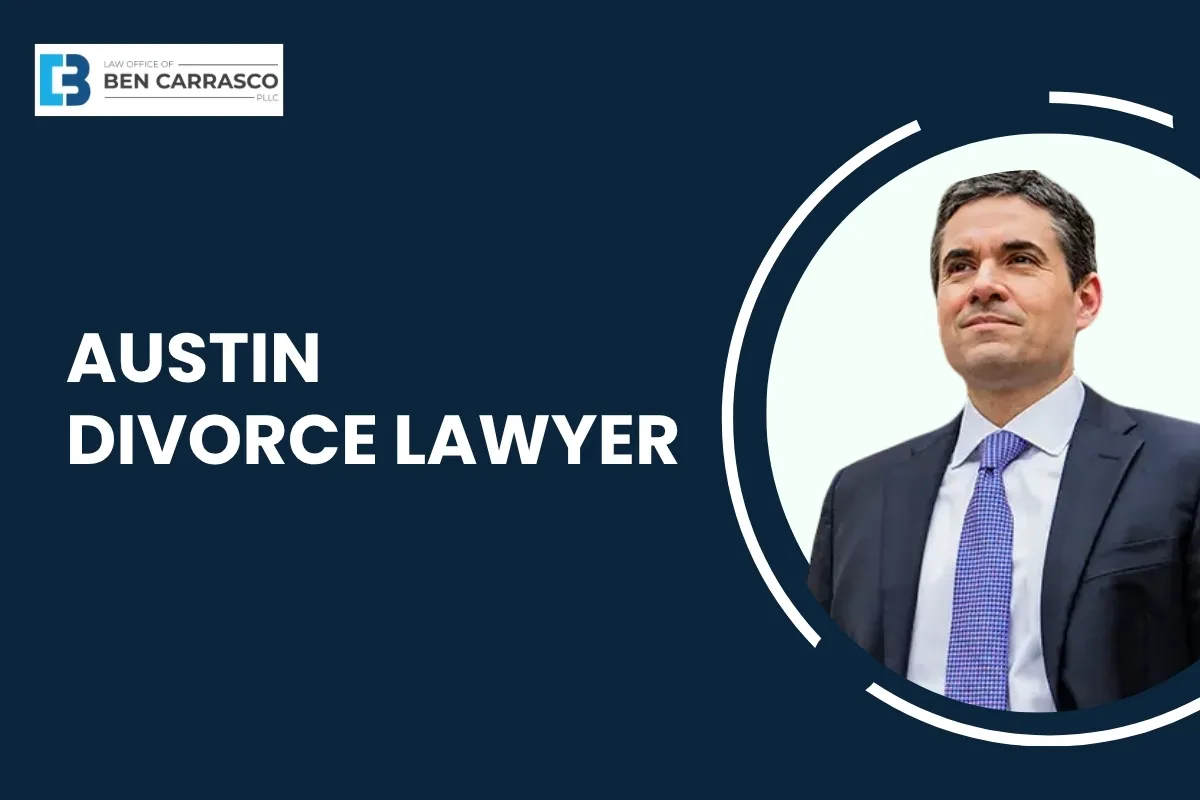
Divorce is a pivotal life event with profound emotional and financial implications. In Austin, where high-net-worth individuals, business owners, and professionals often face intricate marital dissolutions, the guidance of a seasoned Austin divorce lawyer is indispensable.
Ben Carrasco, a board-certified family law lawyer and Stanford Law graduate, brings unparalleled expertise and tenacity to every case. His strategic legal insight and courtroom advocacy have consistently safeguarded clients’ assets, parental rights, and peace of mind during some of life’s most challenging transitions.
Texas permits “no-fault” divorces, allowing spouses to dissolve their marriage without assigning blame. Under Texas Family Code § 6.001, the term “insupportability” denotes that the marriage has become insupportable due to discord or conflict of personalities that destroy the legitimate ends of the marital relationship and prevent any reasonable expectation of reconciliation. An Austin divorce attorney can guide you through the legal standards and help determine whether no-fault or fault-based grounds are better for your case.
Texas operates under a community property system, meaning all assets and debts acquired during the marriage are considered jointly owned. However, division upon divorce isn’t necessarily equal. Per Texas Family Code § 7.001, the court must divide community property in a manner that is “just and right,” considering factors such as each spouse’s earning capacity, fault in the breakup, and future needs. An experienced Austin divorce lawyer will work to ensure your financial interests are thoroughly protected.
The minimum waiting period for a divorce in Texas is 60 days from the date the petition is filed. However, the actual duration varies depending on factors such as asset complexity, child custody disputes, and court availability. Your Austin divorce attorney will help you manage expectations and timelines.
CALL US TODAY
512-320-9126
An uncontested divorce occurs when both parties agree on all terms, including property division, child custody, and support. This route is typically faster and less costly, but it’s crucial to ensure that agreements are fair and legally sound with an Austin divorce lawyer.
In a contested divorce, spouses disagree on one or more issues, necessitating court intervention. These cases often involve complex asset division, custody battles, or spousal support disputes. Having an Austin divorce attorney with litigation experience is vital in these scenarios.
Mediation involves a neutral third party assisting spouses in reaching a mutually acceptable agreement. While not mandatory in all cases, Texas courts often require mediation before proceeding to trial. A skilled Austin divorce lawyer ensure your interests are represented during negotiations.
This process entails both parties and their attorneys committing to resolving disputes without court involvement. It promotes open communication and often results in more amicable settlements with each side retaining an Austin divorce attorney.
Texas courts prioritize the child’s best interests when determining custody arrangements. Factors considered include:
Joint managing conservatorship is common, but sole custody may be awarded if it’s in the child’s best interest. Your Austin divorce attorney will develop a child custody strategy tailored to your family’s needs.
Child support in Texas is calculated based on the non-custodial parent’s net resources and the number of children:
These percentages apply to net monthly income up to a certain cap, adjusted periodically. Courts may deviate from guidelines based on the child’s needs and parents’ circumstances. An Austin divorce lawyer can ensure child support is fair and compliant with state laws.
Source: Texas Child Support Guidelines
In situations involving domestic violence, threats, or harassment, Texas law allows courts to issue protective orders or restraining orders to safeguard individuals and children. Violating these orders carries serious legal consequences. Ben Carrasco has experience securing and enforcing protective orders to help with your safety and peace of mind throughout the divorce process.


Spousal maintenance (alimony) is not guaranteed and is only awarded under specific circumstances in Texas. Eligibility requires that the requesting spouse:
Even if you or your ex-spouse meets one or more of the above criteria, the law presumes support is unwarranted unless the spouse can prove they have made significant efforts to become self-sufficient. For example, by securing employment or specialized training.
In Texas, monthly alimony is capped at $5,000 or 20% of the paying spouse’s average monthly gross income (whichever is less). The duration of support depends on the length of your marriage before divorce:
You must provide support for:
Ben Carrasco is a board-certified family law attorney and adept at navigating the intricacies of spousal support under Texas law. Contact us to set up a consultation with the top divorce attorney in Austin.
Distinguishing between community and separate property is crucial and often requires the counsel of a seasoned divorce attorney. Community property includes assets acquired during the marriage, while separate property encompasses assets owned before marriage or received as gifts or inheritances.
Accurate valuation and proper classification of assets are critical in any Texas divorce. Misclassifying community property as separate property, or undervaluing key assets such as businesses, real estate, or retirement accounts, can dramatically skew the division.
Ben Carrasco takes steps to make sure that every asset is thoroughly analyzed to protect you and your financial interests.
As an Austin divorce attorney board-certified to practice family law, Ben Carrasco is not just any lawyer. His specialized approach allows him to take on complex divorce cases, including:
Divorces involving substantial assets require meticulous attention to detail and advanced financial strategy. Common complexities include:
Engaging financial experts and forensic accountants is often essential to protect your long-term financial interests. Ben Carrasco draws on a trusted network of top-tier professionals—valuators, forensic CPAs, custody evaluators, and vocational experts—whose testimony can be pivotal in proving your claims and strengthening your case.
When one or both spouses own a business, determining its value and dividing it becomes a central issue. Common resolution strategies include:
Each option carries risks and requires sophisticated legal and financial coordination, which can only be secured with an expert attorney on your side.


Divorces involving licensed professionals—such as doctors, attorneys, or executives—often implicate complex compensation and asset structures:
These cases demand tailored legal solutions that preserve professional standing while achieving an equitable division.
While Texas now recognizes same-sex marriages, legal gray areas persist, especially for couples who cohabited before their marriage was legal. Common issues include:
As an Austin divorce attorney, Ben Carrasco applies a nuanced understanding of both Texas law and LGBTQ+ family dynamics to achieve fair, enforceable outcomes.
An annulment treats the marriage as if it never legally occurred—but Texas law only permits annulments in limited, fact-specific situations, including:
Annulments are rarely granted without clear, admissible evidence, and they often require more litigation than a traditional divorce. Ben Carrasco can assess whether an annulment is strategically or legally viable in your case.
Post-divorce, Texas law allows for modification of certain court orders when there’s a material and substantial change in circumstances.
Common modifications include:
Courts require a strong evidentiary showing before altering existing orders.
If one party refuses to comply with the terms of a divorce decree—whether failing to pay support, denying visitation, or withholding property—enforcement becomes necessary.
Legal tools include:
Ben Carrasco, a Stanford-educated, board-certified Austin family lawyer, has deep experience handling post-divorce enforcement and modification actions. He can see that the court holds the noncompliant party accountable and protects your legal rights.
Divorce is never simple. Missteps early on can have lasting financial and legal consequences. You must avoid making the following mistakes as you navigate your divorce:
Emotional decisions can lead to unfavorable outcomes. Maintain objectivity and focus on long-term implications.
Early legal advice can prevent costly mistakes and see that rights are protected from the outset.
Such actions can result in severe penalties and loss of credibility in court.
Ensure all agreements are reviewed by an attorney to confirm fairness and legality.
Understanding common pitfalls and how to avoid them is essential to protecting your rights and positioning yourself for a favorable outcome.
Any divorce can quickly evolve into a complex legal battleground. Having the right Austin divorce attorney on your side is essential.
Whether your case involves disputed child custody, multi-million-dollar asset portfolios, or a strategic interest in avoiding litigation altogether, the decision to hire an Austin divorce attorney can help you better understand the state’s complex divorce laws and how they could affect the outcome of your divorce case. A skilled divorce attorney serves as your protector, negotiator, and advocate from start to finish.
Here’s why retaining an experienced Austin divorce lawyer like Ben Carrasco is one of the most important decisions you’ll make:
Texas divorce law is dense, procedurally demanding, and unforgiving to those who misstep. From property division under Texas Family Code § 7.001, to child custody disputes under Chapter 153, the law is filled with nuances that are often misunderstood or overlooked by self-represented parties.
A seasoned divorce lawyer ensures that:
Ben Carrasco’s deep command of Texas family law ensures that no detail is missed and no advantage is surrendered.
If you are a business owner, investor, executive, or someone with significant separate property holdings, the financial stakes of divorce are immense. Without a targeted legal strategy, you risk:
Ben Carrasco works closely with forensic accountants, CPAs, and valuation experts to protect what you’ve built and ensure a division that is just and right, not merely expedient.
Learn more about our approach to high-net-worth divorce


When children are involved, the stakes shift from financial to fundamental. Texas courts apply the “best interest of the child” standard (see Holley v. Adams, 544 S.W.2d 367), but this flexible standard can be misapplied without vigorous legal advocacy.
An experienced attorney can:
Ben Carrasco crafts custody strategies that balance psychological insight, evidentiary strength, and long-term practicality—especially in contentious or high-conflict cases.
Explore our child custody services
The reality is that most divorce cases settle outside the courtroom, but the best settlements occur when the other side knows you’re ready for trial. The Law Office of Ben Carrasco is not a settlement mill. Ben is a trial-tested litigator who prepares every case as if it’s going to court.
This posture strengthens your negotiating position and ensures you don’t end up with a rushed, one-sided agreement under pressure.
Divorce is inherently stressful. Clients often deal with betrayal, parental alienation, financial loss, or relocation—all while managing careers and children. Having a steady legal advocate allows you to focus on your personal life while your legal strategy is handled with precision.
Ben’s reputation is built on clear communication, responsiveness, and his ability to cut through emotional chaos to deliver sound legal advice.


Every divorce is unique, especially when clients bring complexity to the table:
These scenarios demand not just any lawyer, but one who has handled them before, successfully, and with discretion. Ben Carrasco offers precisely that.
With an average home value of $489,253, Austin offers a mix of housing options. Upscale communities in the area include West Lake Hills, Barton Creek, Tarrytown, and other developments. The city is also home to exclusive golf and country clubs and lakeside homes that can fetch prices in the millions. When a divorce involves multiple properties or assets valued at over $1 million, the property division process can pose unique challenges.
The state’s annual divorce rate of 2.1 per 1,000 people means many Austinites end up at the Travis County Civil and Family Courts Facility, located at 1700 Guadalupe Street here in Austin. Under the state’s community property laws, the marital estate must be divided and classified as separate or community property before community property is divided in a “just and right” manner.
Spouses can face unique challenges when dividing property during a divorce. Accounting for every asset and property can be difficult, especially when estates include multiple properties and complex financial assets. A family-owned business may need careful evaluation of its value. This process could involve:
The party claiming that something they own is separate has the burden of proving that claim. This means they may have to gather evidence, including physical receipts or witness statements. Common forms of separate property include gifts, inheritances, and property owned before the marriage.
A high-value estate may also bring up concerns about transparency. Someone with a large estate may try to avoid disclosing all of their finances or assets. Common tactics used to conceal assets from the court could include:
If your spouse tightly controls the family’s finances, they may be in a position to hide assets from the courts. Your attorney can take steps to make sure that your spouse is open and transparent with the property division process. Deceiving the court is a serious offense and can result in penalties or contempt of court.
If you are going through a divorce and own a large estate, your attorney can take steps to protect your rights and interests. Lawyers play an active role in guiding the divorce process. They can compel disclosures to look for potential signs that your spouse is hiding assets. If there is evidence that your soon-to-be ex is hiding assets, your attorney can call for a hearing to address the matter before a judge.
Early on in a divorce, your lawyer can help you understand the property division process. If you need help accounting for all the parts of the estate or calculating the value of a family-owned business, your attorney can manage those issues or work with a third party to account for the entire marital estate. Accurate data is crucial for the property division process.
Around 18% of the city’s population is under 18, and custody disputes are a common reason that divorces become contested in Texas. Divorces are generally classified as contested or uncontested. When both spouses agree on the terms of divorce or are willing to reach an agreement outside of court, the case is considered uncontested.
Contested divorces result from ongoing disagreements between the parties. Matters like property division, child custody, and spousal support can lead to conflicts that can delay a divorce. When there is a high level of personal animosity on the part of one or both spouses, the divorce may be considered “high conflict,” although that is not a formal legal term.
Some divorces begin as uncontested cases but later become contested. This is one of the reasons why having legal representation from the beginning of a case is crucial. An attorney can prepare for actions by your spouse that could potentially place you at a disadvantage in court. Contested divorces can pose challenges, but the right legal representation can address even the most emotionally and legally complex court cases.
High-conflict divorces can be handled by showing restraint and focusing on your priorities at all times. When communication breaks down and emotions run high, every decision tends to carry extra weight. Staying focused on documented facts rather than accusations helps prevent conflicts from spiraling further.
Mediation could offer a potential pathway forward. The sessions rely on a neutral third-party facilitator to guide conversations and negotiations. When you work with a skilled mediation attorney, you can rely on their years of experience handling complex cases. It is also important to understand that courts value stability and reasoned decision-making.
Judges look for parents and spouses who follow orders, respect deadlines, and show an ability to act responsibly despite conflict. Missed payments, hostile messages, or attempts to manipulate the process can undermine credibility. In high-conflict cases, limiting direct contact, using formal communication tools, and relying on your attorney to communicate with the other side can help resolve outstanding issues and prevent further escalation.

When the outcome of your divorce could affect your business, retirement, parenting rights, and financial independence, choosing the right divorce attorney is the most consequential decision you’ll make.
Ben Carrasco’s credentials—Stanford Law, board certification in family law, and a proven track record in complex litigation—place him among the elite family lawyers in Texas.
This is not the time to cut corners. This is the time to make a serious, informed choice about your legal representation.
Schedule your confidential consultation with Ben Carrasco today
No, a spouse cannot prevent a divorce from happening in Texas. Texas is a no-fault divorce state under Texas Family Code § 6.001, meaning that if one spouse asserts that the marriage is “insupportable,” the court will grant the divorce, even if the other spouse objects or fails to respond.
If a spouse ignores the divorce petition or refuses to cooperate, the petitioner can proceed with what’s known as a default divorce. In this scenario, the court may finalize the divorce based solely on the petitioner’s evidence and requests, which often puts the non-participating spouse at a serious disadvantage.
In cases where the responding spouse contests issues like property division, spousal support, or custody, the case proceeds as a contested divorce and will ultimately be decided by a judge. Regardless of how resistant a spouse is, once divorce proceedings are initiated, the process moves forward with or without their involvement.
At minimum, Texas requires a 60-day waiting period from the date the divorce petition is filed, as provided in Texas Family Code § 6.702. However, very few cases resolve this quickly unless they are truly uncontested and involved no children or significant assets are involved.
For most contested divorces, the timeline extends well beyond 60 days and often ranges from 6 months to over a year, depending on:
In high-net-worth or high-conflict cases, it’s not unusual for divorce litigation to take 18 to 24 months, particularly when discovery is extensive or expert testimony (e.g., forensic accountants, custody evaluators) is required.
No, Texas is not a 50/50 state in divorce. Texas follows the doctrine of “just and right” division under Texas Family Code § 7.001, which allows the court to divide community property in a manner it deems equitable, not necessarily equal.
A 50/50 split may be appropriate in some cases, but courts consider a range of factors to determine fairness, including:
In high-asset divorces, strategic advocacy is crucial to ensure that complex financial holdings, such as business interests, investment accounts, and retirement plans, are accurately valued and fairly divided.
For more details, visit our Austin property division lawyer page.
To get the most value out of your first consultation with Ben Carrasco, bring documents that will allow for an informed legal and strategic discussion. These include:
If child custody is a concern, bring any relevant parenting schedules, communication logs, or documents showing each parent’s role in the child’s life. The more information you can provide up front, the more productive your strategy session will be.
CALL US TODAY
512-320-9126
Whether you’re facing a high-conflict custody battle, protecting business assets in a high-net-worth divorce, or seeking a dignified resolution to a long-term marriage, Ben Carrasco offers the caliber of legal representation that serious clients demand.
As a Stanford-educated, board-certified family law attorney, Ben has successfully represented executives, business owners, professionals, and parents across Austin and Central Texas. He brings not just legal knowledge, but strategic foresight and trial-tested advocacy to every case.
Your divorce outcome will shape your financial future, your family life, and your peace of mind. Don’t navigate it alone.
Secure your future with confidence. Contact the Law Office of Ben Carrasco to schedule your confidential divorce consultation with the divorce attorney Austin trusts most.






We live by our commitment to zealous advocacy and are passionate about your case. Whether you need assistance with a high-conflict divorce or a custody modification, our smart and responsive approach is designed to yield a positive outcome for you. Don’t hesitate to reach out.
"*" indicates required fields
Call Us Today
512-320-9126
© Copyright 2026 The Law Office of Ben Carrasco, PLLC• All Rights Reserved. Disclaimer | Site Map | Privacy Policy. Digital Marketing By: